POPULATION
Birth rates are falling almost everywhere
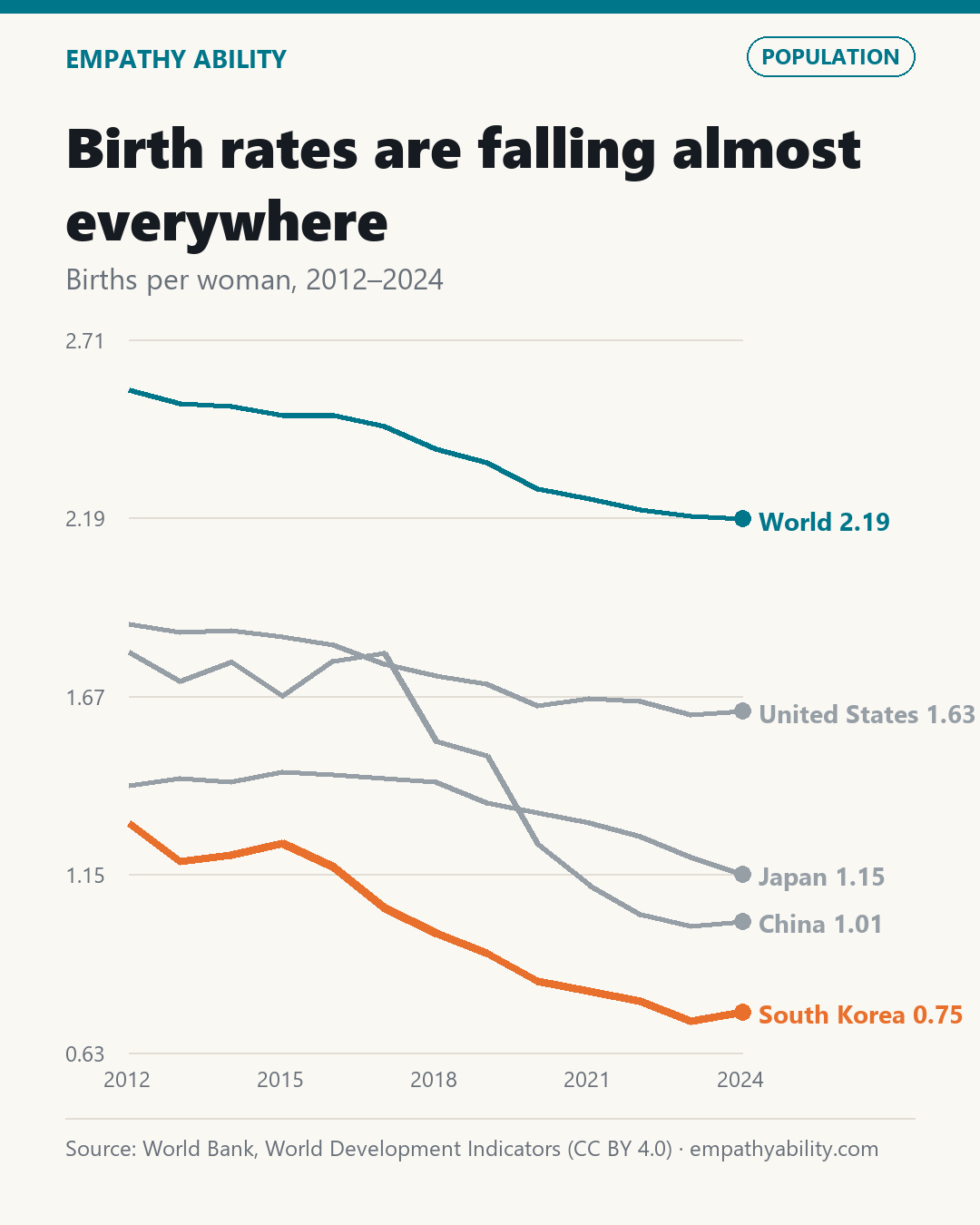
From 2012 to 2024 the world fertility rate fell from 2.56 to 2.19. In East Asia the drop was far steeper: China from 1.80 to 1.01, South Korea from 1.30 to 0.75.
The short answer
Between 2012 and 2024 the global fertility rate fell from 2.56 to 2.19 births per woman, according to World Bank data. None of the major economies we compared saw a rise.
The steepest declines
China's rate dropped from 1.80 to 1.01 and South Korea's from 1.30 to 0.75. Japan, which was already low, fell from 1.41 to 1.15. The United States moved from 1.88 to 1.63 and France from 2.01 to 1.61.
Why the trend matters
Because fertility changes the size of each new generation, a decade of decline shapes school enrolment, labour markets and pension systems for decades. The world average is still above the replacement level of about 2.1, but it is getting close.
How we made this
Data: World Bank, World Development Indicators (indicator SP.DYN.TFRT.IN), annual values 2012–2024, for the world and selected economies.
| Country / economy | 2012 | 2024 |
|---|---|---|
| World | 2.56 | 2.19 |
| United States | 1.88 | 1.63 |
| Japan | 1.41 | 1.15 |
| China | 1.80 | 1.01 |
| South Korea | 1.30 | 0.75 |
Frequently asked questions
Is the world population still growing?
Yes. Even with falling fertility, the world average is above 2.1 and people are living longer, so the total population is still increasing.
Which country had the lowest rate in 2024?
South Korea, at 0.75 births per woman.